
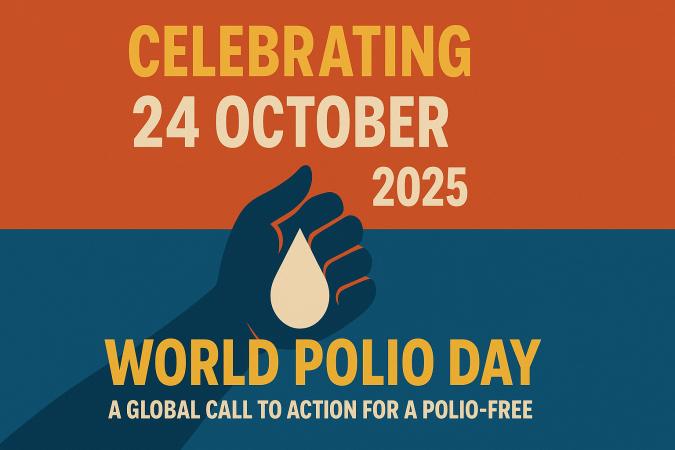
Celebrating 24 October – World Polio Day 2025: A Global Call to Action for a Polio-Free Future
Celebrating 24 October – World Polio Day 2025: A Global Call to Action for a Polio-Free Future
Table of Contents
-
What is World Polio Day and why 24 October matters
-
The global significance of the annual polio awareness day
-
History of polio eradication efforts and the birth of World Polio Day
-
How polio persists: the current global situation in 2025
-
Key strategies: vaccination, surveillance and outbreak response
-
Why we must keep immunisation strong: the risks of pausing efforts
-
How communities and individuals can mark World Polio Day and support eradication
-
Region-specific focus: South Asia, Africa and the remaining endemic pockets
-
Top FAQs about World Polio Day, eradication and global progress
-
Summary: why on 24 October we unite, renew and act
What is World Polio Day and why 24 October matters
Every year on 24 October, the world observes World Polio Day — a dedicated global awareness day to highlight the fight against poliomyelitis and to recommit to ending this disease for good.
The date was chosen to honour Jonas Salk, the scientist who led the first team to develop a polio vaccine. Get More information About Anticancer Medicines Manufacturer India
On this day we stand together: governments, health organisations, volunteers, communities and each of us. We recognise the progress made and the work still ahead.
This observance is not just symbolic. It serves as a moment to sharpen our focus on immunisation coverage, virus surveillance and rapid outbreak response — because until polio is everywhere eliminated, it remains a global threat.
The global significance of the annual polio awareness day
World Polio Day is more than a calendar event: it is a global rally-point.
-
It gives a spotlight to the efforts of thousands of health workers, volunteers and caregivers who deliver vaccines on the front line.
-
It helps mobilise political commitment and financial backing at international, regional and country levels.
-
It reminds us that the battle against polio is far from over — even if many countries are now polio-free, pockets of vulnerability remain.
-
It reinforces that eradication is not just a public-health milestone but a moral and societal one: protecting the vulnerable, safeguarding children’s futures and strengthening health systems.
When we raise awareness on 24 October, we amplify the call to maintain and accelerate efforts so that no child, anywhere, is paralysed by polio again.
History of polio eradication efforts and the birth of World Polio Day
Polio once stood among the most feared infectious diseases of childhood — causing paralysis, death and lifelong disability across the globe. Over decades, the development and deployment of effective vaccines changed the tide.
In 1988, the Global Polio Eradication Initiative (GPEI) was launched, committing to eradicate all wild poliovirus.
The observance of World Polio Day was established by Rotary International to commemorate Jonas Salk’s achievement and to galvanise global action.
Over the years, extraordinary progress has been made: more than 99 percent reduction in wild polio cases, millions of children protected from paralysis.
Yet the history reminds us: the last steps towards eradication are always the hardest. On each World Polio Day we reflect on lessons, review gaps and renew resolve.
How polio persists: the current global situation in 2025
Even though the world is closer than ever to eliminating polio, the virus still lingers — and the consequences of any weakness in our defence can be severe.
Some of the key realities in 2025 include:
-
Wild poliovirus transmission continues in a handful of endemic countries, while others face outbreaks of circulating vaccine-derived poliovirus (cVDPV).
-
Regions once certified polio-free still require vigilance — because as long as the virus exists anywhere, it can resurface elsewhere.
-
Immunisation coverage gaps, conflict-affected zones, weak surveillance systems and population movement all pose risks.
For us, the message on 24 October is clear: we cannot relax. We must maintain momentum so that polio becomes history. The date reminds us of persistence, resilience and collective responsibility.
Key strategies: vaccination, surveillance and outbreak response
To mark World Polio Day meaningfully, it is important to understand the pillars of polio eradication — and to act accordingly.
Vaccination coverage and reaching every child
Vaccines are the first line of defence. Whether using the inactivated polio vaccine (IPV) or the oral polio vaccine (OPV), high coverage is non-negotiable.
Protecting every child from polio requires maintaining high immunisation coverage. On World Polio Day, we reaffirm the goal to reach every last child, especially those in underserved, remote or conflict-affected settings.
Surveillance and detection of poliovirus circulation
Even if no paralytic cases are reported, poliovirus may still circulate silently. Robust surveillance systems help detect and respond quickly. High-quality monitoring, coupled with rapid response to any detection of the virus, is essential.
On 24 October, we remind ourselves: a missed case or silent outbreak can undo decades of progress.
Outbreak preparedness and response mechanisms
When poliovirus spreads, time is of the essence. Rapid immunisation campaigns, effective communication and coordination across agencies and communities are critical.
In essence: Vaccinate → Detect → Respond. On World Polio Day, we pledge to keep those systems active and strong.
Why we must keep immunisation strong: the risks of pausing efforts
The fear of polio returning is not hypothetical — it is real. On 24 October we acknowledge that stopping or weakening our efforts opens the door to resurgence. Consider:
-
Countries once certified polio-free still face risks of reintroduction if immunisation or surveillance falter.
-
Outbreaks of vaccine-derived poliovirus (cVDPV) show that even with vaccination, if coverage is low, the virus can mutate and spread.
-
Global commitment is uneven, and renewed funding and political resolve remain crucial.
For us together, the message is: complacency is not an option. Every child left unprotected, every surveillance gap ignored, every funding shortfall untreated invites the virus back.
How communities and individuals can mark World Polio Day and support eradication
Celebrating 24 October doesn’t have to be passive. Here are ways we can engage and contribute:
Spread awareness
Share posts, stories, facts and local polio-day events on social media. Use hashtags like #WorldPolioDay, #EndPolio, and #VaccinesWork. Awareness drives political momentum and community engagement.
Support vaccination campaigns
Health professionals, community workers and parents can actively check that children are vaccinated, that booster programmes are maintained, and that no child is missed. Volunteering or supporting local immunisation drives makes a difference.
Advocate for strong health systems
On World Polio Day we can reach out to local representatives, public-health bodies or NGOs to stress the importance of immunisation and surveillance. Advocacy helps ensure that eradication remains a policy priority.
Educate and comfort
For families — especially those that may have vaccine hesitancy — World Polio Day is a chance to talk about the history of polio, its potential consequences and how vaccination protects communities. Personal stories can build trust.
Join or support events
Many organisations host webinars, walks, fundraisers or educational sessions on 24 October. Participating deepens our commitment and connects us to global action.
Region-specific focus: South Asia, Africa and the remaining endemic pockets
Though polio cases have plummeted globally, the situation is uneven across regions — which makes our vigilance even more critical.
South Asia
Some of the final endemic transmission persists in parts of South Asia. It remains essential that India, Pakistan, Afghanistan and neighbouring countries maintain high immunisation and cross-border coordination.
Africa
Several African countries have succeeded in eliminating wild poliovirus, yet the region must remain alert for imported cases or vaccine-derived strains. On World Polio Day we reaffirm that we will not allow progress to be reversed.
Fragile settings and conflict zones
The majority of children affected by polio live in fragile and conflict-affected areas. World Polio Day reminds us to reach children in hard-to-access zones, displaced populations and communities facing humanitarian crises.
Household and national levels
Even in polio-free nations, sustaining immunisation is key. On 24 October we confirm that every country, every region, every sub-region must keep the guard up until eradication is certified worldwide.
Top FAQs about World Polio Day, eradication and global progress
Q1. Why is World Polio Day celebrated on 24 October?
Because this date marks the birth of Jonas Salk, who led the first team to develop the polio vaccine. The day was chosen to inspire global action.
Q2. What is the main objective of World Polio Day?
To raise awareness of polio, mobilise resources, honour those working toward eradication and renew commitment to reach every child with the vaccine.
Q3. Has polio been eliminated globally?
Not yet. While wild poliovirus cases have declined by more than 99 percent, a few regions still face endemic or vaccine-derived outbreaks.
Q4. Why can polio still re-emerge in countries that were polio-free?
Because immunity gaps, low surveillance or imported cases can allow the virus to resurface. Maintaining vaccination and detection systems is essential.
Q5. What can individuals and communities do on World Polio Day?
We can raise awareness, support immunisation drives, advocate for stronger health systems and participate in community events to keep polio in the past.
Q6. Why is eradication of polio so vital?
Because once eliminated, the world saves lives, prevents lifelong disability, frees resources and strengthens systems for other diseases.
Q7. What are the remaining challenges in the final push toward eradication?
Challenges include reaching children in conflict zones, addressing vaccine-derived poliovirus, maintaining funding and sustaining global coordination.
Summary: why on 24 October we unite, renew and act
On this World Polio Day 2025, we stand together as a global community, reminding ourselves that the fight against polio is both historic and urgent. We celebrate the progress achieved — millions of children saved, countries made polio-free, partnerships formed across continents. At the same time, we acknowledge the remaining front lines, the fragile zones, and the un-reached children.
Together, we commit to protecting every child, strengthening every health system and sustaining every surveillance and outbreak-response measure. Because while polio exists anywhere, it is a risk everywhere.
Our task on this day is to renew our resolve, amplify our actions and accelerate toward a world with zero polio cases, permanently.
Let us make this 24 October – World Polio Day a turning point: one step closer to a polio-free world.
Comments

.jpeg "Best Anti Cancer Medicine List: Top Treatment for 2025")
.jpeg "Best Anti Cancer Medicine List: Top Treatment for 2025")

.jpeg "What is the Perfect Food and Medicines Against Cancer? A Comprehensive Guide to Prevention and Healing")

.jpeg "Comprehensive Guide to Kidney Cancer: Symptoms, Causes, Diagnosis, and Treatment")

.jpeg "Comprehensive Guide to Pancreatic Cancer: Symptoms, Causes, Diagnosis, and Treatment")
MEDICAL DISCLAIMER
Chawla Medicos only express opinions and provide information. All Trademarks, Brands and Service marks that appear on this website belong to their respective owner. We do not recommend any drug or give medical advice. Whether a medication is right for you is a decision between you and the prescribing doctor. The content of this site should not be a substitute for professional medical advise, diagnosis or any treatment. Above information is meant for: Wholesalers, Suppliers, Doctors, Hospitals, Clinics, Resellers,Medical Institutions and Pharmacies.